Tuesday, 19 February 2013

Morkozhambu/Butter milk Kozhambu/Dahi/Yoghurt/Curd Gravy


Morkozhambu/Butter milk Kozhambu is a very delicious and unique gravy variety. Besides, all the ingredients have great medicinal value, which promotes digestion.


Morkozhbu/Butter milk Kozhambu with Winter Melon/Poosanikkai


Ingredients:


Yoghurt/Thayir/Curd/Dahi (preferably sour) - 1/2 Cup

Turmeric Powder - 1/4 tsp.

Winter Melon/ Poosanikkai - 250gms
(Cut into 1&1/2 inch strips) or

Choyate - 1
(Cut into 1 & 1/2 inch strips)


Choyate/Chow Chow


To Grind:

Ginger - 1 small piece

Garlic - 2

Green Chillies - 4 to 5

Grated Coconut - 1 to 2 tbsp.

Cumin Seeds - 1 tsp.

Fresh Coriander – to garnish

 
Ingredients to grind


Tempering:

 
Mustard seeds – ¼ tsp.

Jeera/Cumin Seeds - 1/4 tsp.


Black Pepper (crushed lightly) – ½ tsp.

Dried Red Chilli – 1 to 2 (or)

Crushed dried red Chilli - 1/4 tsp.

Curry leaves – few

Asafoetida/Perungayam/Hing – 1/8 tsp.


Combine yoghurt with water using whisk, to avoid lumps 


Getting cooked in low heat


Method:


Grind the above ingredients with enough water.  Dilute the curd/yoghurt/dahi with 1 cup water and mix it well. (Use a whisk to combine well)  Add the ground masala, turmeric powder, coriander powder and salt to the diluted curd, and set aside. Wonderful flavor would emanate from the mixture. Check the salt level and add more if needed.

In a kadai/pot cook the choyate/winter melon with 1 cup water, salt and turmeric. Avoid over cooking, it should still be firm and not very soft, esp., the winter-melon, otherwise it tends to merge with the curd.
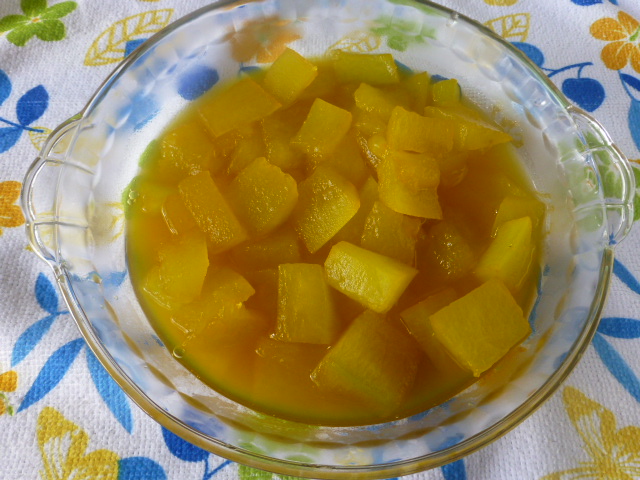
 
Cooked Winter-melon
 

Take a kadai, pour oil and do the tempering, then add the cooked Choyate/Winter-melon, after a minute.  Reduce the flame to the lowest, then add Yoghurt/dahi/curd mixture and cook in low flame until it boils. It will take 8 to 10 minutes.  Don’t ever increase the flame, or else the gravy might curdle.
 
 
Morkozhbu/Butter milk Kozhambu seved with Rice & Pappad
 

Garnish with fresh Coriander leaves, delicious Morkozhambu/Buttermilk Kozhambu/Dahi/Youghurt gravy is ready to serve. Serve with hot rice and Appalam/Pappad. It’s a great hit with our kids.


Monday, 18 February 2013

Chettinad Kosamalli/brinjal curry for Idli/dosa/idiyappam


Kosamalli/Brinjal curry with Idiyappam/Rice noodles!


Kosamalli/brinjal curry for Idli/dosa/idiyappam


Kosamalli is less spicy gravy, which is suitable as well as favorite for kids and adults alike. Now-a-days, we boil the veggies, whereas earlier, Achis use to grill them. It's also called as 'Kothsu'.

Whenever I make Kosamalli, it brings back my childhood memories, enjoying it with Idiyappam and Dosai.


Ingredients for Kosamalli/Brinjal Curry
(1 Potato - optional)


Ingredients:


Brinjal (small to medium size) - 8 to 10

Potato (medium size) - 1 (optional)
(Potato gives thick consistency)

Green Chilli - 8

Big Onion - 1 (or)

Small Onion - 12

Crushed Red Chilli - 1/2 tsp.

Tamarind juice - 1 tbsp.


Salt - to taste

Coriander leaves - to garnish
(try to include fresh coriander leaves, it gives out a wonderful flavor)


Mashed Brinjal


Tempering:


Mustard Seeds- 1/4 tsp.

Perungayam /hing/Asafoetida - 1/8 tsp.

Dried Red Chilli - 2

Oil - 2 tsp.

Curry Leaves - few


Method:

Pressure cook halved Brinjal and Potato (with skin) for 2 whistles. Let it cool. Brinjal and Potato will be very soft, remove the skin and mash them well. Add tamarind juice, salt, crushed red chillies and enough water.

In a kadai/cooking pot, pour oil, add mustard seeds, when it splutters, add hing/Asafoetida/Perungayam, followed by dried red chillies and curry leaves.

Now add onion and green chillies, cook for few minutes, then pour the mashed Brinjal, Potato mixture. I make it watery, because my kids like that way, according to your taste add water. Bring it to boil, immediately switch it off, it should not boil more, if boiled more, it will ruin the taste.

Garnish with fresh Coriander leaves, now very tasty Kosamalli is ready to be served with Idli, Dosa or Idiyappam.


Kosamalli/Brinjal Curry with Dosa


Typical Chettinad Breakfast - Idli, Kosamalli with Kavani Arisi!


Tips Tips Tips...


Asafoetida should get roasted for few seconds; otherwise it will give a bitter taste. If it's roasted well, it gives a wonderful flavor.

If you want to make Kosamalli spicy, you can pound the green chillies slightly in a mortar and pestle, before cooking with onions.


Cauliflower/Gobi Manchurian:

Gobi/Cauliflower Manchurian


Gobi/Cauliflower Manchurian is an all-time favorite among kids as well as adults. With little effort, we can make perfect restaurant-style, Gobi Manchurian at home.
Here's the recipe. I adapted this from Vah Chef's Manchurian recipe and altered here and there, to suit our taste.


Ingredients:


Gobi/Cauliflower Florets


Cauliflower - 1 (cut into small florets)
(florets of one cauliflower about 250gms)

Capsicum - 1 (diced into small cubes)

Big Onion - 1 (finely chopped)

Garlic - 5 pods (finely chopped)

Ginger paste - 1 tsp.

Corn flour - 1 tbsp.

Plain Flour - 3 tbsp.

Rice flour - 1 tbsp.

Turmeric Powder/Haldi - 1/4 tsp.

Chilli powder - 1 tsp.

Salt - to taste (can use less, since we use sauces which contain salt)

Soya sauce - 1/2 tsp.

Tomato ketchup - 1 tsp.

Ching's Manchurian sauce - 2 tbsp.
(available at Mustafa Centre, Singapore)

Fresh Coriander - to garnish.

Spring Onion - to garnish (optional)


Method:


Combine corn, plain and rice flour together with bit of salt and turmeric. Add enough water to make a batter out of it. Coat all the florets with the batter and deep fry until golden. Set aside. (to expedite the frying time, we can microwave the cauliflower for 2 minutes before frying)


Plain,Corn,Rice Flour Mixture with Turmeric


Flour coated Gobi/Cauliflower


Getting fried


Fried Cauliflower/Gobi


Cauliflower/Gobi Manchurian


In a pan, add 2 tsp. of oil, stir the ginger paste, after a minute, stir in chopped garlic, followed by onion. Cook for two minutes. Then add capsicum with little water and little salt, let it cook for few minutes, add chilli powder followed by all the sauces. Then stir-in the cauliflower florets, mix well. Switch off and garnish with fresh coriander and spring onion.

Restaurant style cauliflower/Gobi Manchurian is ready to serve.

Since, deep frying's involved, it can be an occasional treat for kids.


Thursday, 14 February 2013

Pongal Kolam/Nagarathar Nadu Veetu kolam:

Nagarathar / Chettiars Style Pongal Kolam/Nagarathar Nadu Veetu kolam:


Nagarathar Nadu Veetu kolam


Nagarathar Nadu Veetu kolam is drawn for all kinds of functions held at homes, also during Pongal and Pillaiyar Nonbu.  I chose to give this post esp., for the youngsters, who have settled overseas, away from India, yet would like to follow traditions, which not only gives nostalgic memories but also absolute satisfaction and a complete feeling.


We need:

Pongal Pots - 2

Kalavadai or pot holder - 3

Villakkuchatti / big bowl - 1

Pot lids - 3

Turmeric Powder - 1/2 tsp.

Raw Rice Flour - 1/4 to 1/2 cup

Plain flour - 1 tbsp.

A small piece of cloth

Ear buds - 2 to 3


In Singapore, Malaysia, Elephant Brand Rice flour is available which perfectly suits  kolams designs. It's a product of Thailand. Just need to add water.


Alternatively, we can soak raw rice/long grain rice/pacharisi for half-an hour, before grinding it into a paste.  Add plain flour to make the design bright and thick, this will also help to retain the design for few days. It cannot be easily rubbed away, like plain rice flour designs.


Divide the kola mavu/batter into two portions, add turmeric powder to one portion, to give nice bright yellow color. Now the mavu/batter is ready to make designs.


Kola mavu/Batter


Pongal Pot design/Pongal panai kolam


Pongal Pot design/Pongal panai kolam


Pongal Pot design/Pongal panai and Villakku Chatti Kolam


Small designs to place the Pongal pots and Villakku Chatti in Prayer room


Manjal kothu kattiya Pongal Panai/ Turmeric leaves twined Pongal pots


Villakku Chatti


Pongal Pot design/Pongal panai kolam


Kolam on Stove Top


Nagarathar/Chettiar Nadu Veetu Kolam


Simple Pongal Panai and karumbu/Sugar cane design at the door step


Wednesday, 13 February 2013

Ellu Podi/Sesame seeds Powder:


Ellu Podi/Sesame Seeds/Till Powder with Soft Idlis!


Ellu Podi/Sesame Seeds/Till Powder


Ellu or Sesame seeds/Til esp. the black ones are packed with Calcium. Besides all the other benefits, Calcium helps prevent Osteoporosis in women. We have to find a way to consume more Ellu/Sesame seeds.


Ingredients:

Ellu/Black Sesame Seeds/Til - 1/2 Cup

Garlic - 6 small pods

Dried Red chillies - 10 to 15
According to spice level

Curry Leaves - few

Hing/Perungayam/Asafoetida - 1/4 tsp.
(dry roasted)

Salt - to taste

Gingelly oil - 2 tsp.


Ingredients for Sesame seeds Powder
 

Method:


Dry roast sesame seeds, until a rich flavor emanates. (Avoid burning)

Roast garlic pods with few drops of oil.

Roast curry leaves with few drops of oil.

Sauté Red chillies for few seconds until warm.

Allow the roasted ingredients to cool, and then grind them in a mixer coarsely.

Toss the Gingelly oil over the powder and store it in an air-tight container.

It goes well with Idli/Dosai.


Ellu Podi/Sesame Seeds/Till Powder


Thursday, 7 February 2013

Home Remedies/Kai Vaidhyam - Ginger Decoction/Inji Kashayam and Tulsi/Basil Kashayam


Home Remedies or Kai Vaidhyam or Paati Vaidhyam is not new for Indians, esp., it’s very common among Nagarathars/Chettiars.

Here I’m giving the remedies, which I have personally tested, tried and verified the effectiveness.
Home Remedy for Cough and Cold: Inji Kashayam/Ginger Decoction:


Inji Kashayam/Ginger Decoction
Inji Kashayam or Ginger Decoction is sure to prevent as well as treat Cough and Cold.

I used to have phlegm in my throat, throughout the year and I used to suffer from flu, very often. After I started drinking this Kashayam on a regular basis, gradually the phlegm disappeared and my flu attacks gone down.

When we take allopathy tablets like anti-histamines, decongestants, cough suppressants and expectorants, the problem is, as one symptom disappear, another will crop up. When we get rid of running nose, we are heading for cough and phlegm. Often we suffer from repeated flu attacks.

By taking Inji Kashayam, we can treat as well as prevent running nose, cough and cold. Above all, we can be rest assured that there won't be any side-effects, unless you are allergic to any one of the ingredients, which is rare.

It also promotes digestion which is very important for our health.


Inji Kashayam/ Ginger Decoction:

Ingredients for Inji Kashayam/Ginger Decoction


Ingredients:

Ginger - 1 piece (about 3 inch)

Pepper - 1 tsp.,

Cardomom /Elakkai - 3

Cloves/Kraambu - 3

Cinnamon/Pattai - 1 small piece

Palm/Rock/brown Sugar/Panankarkandu - 1 tbsp.

Omavalli/Karpooravalli leaves - few
(country borage, colcus aromatica)
(upon availability you can use it, otherwise proceed with other ingredients, will still be effective)

Betel leaves/Vethallai - 2 (upon availability)

 
Natural Palm Sugar/Panangarkandu!!


Karpooravalli/Omavalli plant in my mini garden


Method:


In a mixer, grind all the spices with water. Add one cup water and the sugar. (To dilute and make it less spicy, you can add more water.) Let it boil for few minutes. In the meantime, take the leaves pound it with a mortar & pestle, then with little water add it to the boiling Kashayam. Let it boil for 1 minute, switch off. Now filter and let it cool. When it is warm, it's ready to drink.


- Adults can drink 1/2 to 1 cup.

- Kids aged 7 and above can drink up to 1/2 cup.

- Young kids can drink 5 to 15 ml.

- It’s better to drink early in the morning, when stomach is empty.


However, we can drink 2 to three times a day, mid-morning, afternoon and early evening. Avoid drinking milk while taking Kashayam, they don't go together. Also avoid consuming after meals. Kashayam and meals should be spaced out well.

 I always try to use fresh ginger, which is greatly reflected in the effectiveness of the decoction.

Sometimes, I found the kashayam turning sticky after boiling, through the experience, I realised that the reason is the variety of the Cinnamon bark/Pattai, in such cases you can conveniently skip Cinnamon/pattai and continue with the rest of the ingredients.  

Over time I figured out Cinnamon variety is very important, now I'm using Srilankan or Ceylon Cinnamon, which is really good and flavourful. Cinnamon is well known for its medicinal properties. So it's good to include in your diet.


Srilankan/Ceylon Cinnamon


Simple Alternative for Ginger/Inji Kashayam:

 Ingredients for 2 servings:
Ginger/Inji -  2 to 3 inch piece
Cloves/Krambu  - 3 to 4
Black Pepper/Milagu  - few
Elachi/Elakkai - 2 to 3
Water - 1&1/2 Cup
Natural Palm Sugar/Panangarkandu - 2 to 3 tsp. (according to taste)
Choose Original Panangarkandu!!!


Method:
Peel the ginger and cut into small slices, along with all the other ingredients add water and grind it in a mixer/blender.
Take 1 Cup of water and mix it to the ground paste, add the Panangarkandu/palm sugar and allow it to boil. Once boiled, switch off and allow it to cool. Drain with a large strainer /filter first and again drain with a fine strainer.  Serve preferably in empty stomach or take one hour after meal.  It's very effective in preventing and treating cough and phlegm.  Also aids digestion.
Ground Mixture


Add Water to the mixture and boil...
Large Strainer..


Fine Strainer..


Ready to serve!!


Holy basil or Tulsi (Ocimum sanctum):

Basil/Tulsi


This is a very potent herb, which has excellent antibiotic property can be very very effective in getting rid of phlegm and cough; for sure it will prevent chesty infections if taken at the beginning stages.  Since it a very potent herb, we cannot consume more than 3 days in a row.  But within that, it would have magical effect.


Tulsi/Basil lightly pounded!


Tulsi/Basil with Water


Tulsi/Basil Kashayam/Decoction mixed with Ginger Decoction


Wash fresh Basil/Tulsi leaves with plenty of water, rinse again and again to get rid of soil.  Pound the leaves coarsely with mortar and pestle, to emanate wonderful flavour from the herb. Add to the already boiled ‘Ginger Decoction’, allow it to boil once. The herbs should not be boiled for a long time to retain the effectiveness.  Drain, cool and serve warm.


Alternative Method:


Pound 1 tsp. black pepper, add palm sugar and water, boil for 2 to 3 minutes, then add pounded Tulsi.  Boil for just one minute, allow it cool, strain before using it. 


Tulsi/Basil Kashayam/Decoction


To learn more about Tulsi, log on to the following website:
http://tulsiplant.org/tulsi-leaves/
In Singapore, Basil leaves or Tulsi is available at ‘Jothi Store Pushpa Kadai’, in Little India, I’ve even found in some Indian flower shops in ‘Residential areas’.