Showing posts with label Home Remedies. Show all posts

Tuesday, 3 July 2018

Milagu Manjal Paal/மிளகு மஞ்சள் பால் Turmeric Pepper Milk for Cold and Cough


Turmeric and Pepper have innumerable health benefits and they are gaining popularity all over the world.

But it has been our tradition to add turmeric and pepper in our daily diet. Especially since young, milk with turmeric and pepper has been our home remedy for cough, cold and throat infection.

I use to avoid turmeric milk when my mother gives it to me because of the spicy taste. But now I make it religiously for my kids on a regular basis, even though when they’re hale and healthy. I just reduce the amount of pepper so that they don’t tend to avoid and.. it works 😊


I’m sure it will be very soothing for the throat, during throat infection. It’s a great remedy for cold and cough. You can even take it on a regular basis.


Srilankan/Ceylon Cinnamon


Ingredients:


Whole Turmeric/ Manjal Kizhangu - 1 piece. (or)

Turmeric Powder/Manjal Thool - 1/4 tsp.

Black Pepper (to be crushed) - 1/4 tsp.

Cardamom/ Ellakkai - 2

Cinnamon Powder/ Pattai Thool - 1/8 tsp.

Milk - 2 Cups

Palm Sugar/ Panangarkandu - 4 tsp.


Crushed Turmeric, Pepper and Cardamom..


Method:

With a Mortar and Pestle, crush the Whole turmeric/ Manjal Kizhangu, Cardamom/Ellakkai and Black Pepper/Milagu.

Take the mixture and add it to the milk with Palm sugar/Panangarkandu and Cinnamon Powder/Pattai Thool.

Bring it to boil and switch off. Use a sieve to filter the crushed ingredients. Serve warm for the kids and serve hot for adults


Tips,tips,tips...

If serving to children or adults when they have cold or cough, try to dilute the milk with equal proportion of water. Thick milk is said to produce phlegm.


Friday, 3 May 2013

Fighting Plaque in Kids and Adults


“Vicco Vajradanti Herbal Tooth Powder”


Now-a-days kids get to eat more sweets, junk food and drink carbonated drinks, which are harmful for the teeth.  We can control the intake, but it’s difficult to avoid them totally. So I see a lot of children and adults alike have problems with their teeth. Dental hygiene should start at a very early age, so that we can have our teeth life-long.

Dental care includes gum care, which we tend to ignore these days, that’s where the problem begins.  I’ve a tried and tested solution which is very simple, handy and available almost everywhere. “Vicco Vajradanti Herbal Tooth Powder” – is the solution, if you try just once, you would definitely know the difference, the freshness of breath, tightened gums, plaque free teeth, will give you a great feeling.  With prolonged use, you can experience much more benefits. It's availble at "Mustafa Centre' and almost all the Indian provision shops.

It's very helpful, even for usual gum problems (kids & adults) like irritated, burning gums, swollen gums, just press the powder and leave it for five minutes before you rinse and massage gently. In a day or two, you can get relieved.

It’s basically an Ayurvedic tooth powder, which is made of herbs, thus harmless and gives very good protection for your gums.  Ayurveda , "life knowledge"; or ayurvedic medicine is a system of traditional medicine native to the Indian subcontinent and a form of alternative medicine.

Ever since my childhood memories could go far, my father would insist on using herbal tooth powder, which was and is still available in the petty-shops in all the residential areas. That tooth powder is made of cinnamon powder and salt. In our native ‘Tamil’ language, we call it as ‘Karuvapattai palpodi’.

My siblings and I were so much resistant towards it, because we fancied all the white, foamy, sweet tooth pastes available in the market (which were much advertised).


Eventually we switched off to the fancy tooth paste and got so many dental problems due to poor dental hygiene. I ended up with root-canal treatment for my tooth, which was very tedious.  I didn’t want this to happen to my kids, so I would narrate all these anecdotes to them and cajole them into using “Vicco Vajradhanti”. To my relief, Viccco has come out with a paste form, which my kids have no objection using it and eventually enjoying all the benefits of the herbal product.  But still I’m an ardent fan of ‘Vicco Vajradanti Powder’. Time to time, I get them to use the powder as well.


Vicco Vajradanti Tooth Paste!

My Younger daughter fell face down and got her front tooth pushed back, I received a call and I had to rush to the school.  In the mean-time I called my Dentist and he asked me to come within half-an hour’s time.  Luckily the school was nearby, so I rushed her to dentist within time.  He examined, did an X-ray and confirmed that there’s no fracture. He applied temporary clip, to hold the tooth in position.  He also said, “Nothing much we can do at this moment, keep it clean and don’t bite hard items”.  I was really scared, because that’s her fresh adult tooth, if it falls; she has to lose her permanent front tooth at a very tender age. Then I explained to her that we have to take care of her gums very well and started using ‘Vicco Vajradanti powder’ twice a day(along with prayers). To our surprise, later when we went for a review, the Dentist told the tooth is intact and removed the clip.(still it's slightly lopsided, though..)


To use ‘Vajradanti powder’, we have to take the powder and firmly apply over the teeth and wait for min 3 minutes, before we rinse. Then you can use your tooth brush to get rid of left over powder from your teeth and finally, massage your gums gently.


For Vajradanti Tooth paste, just brush as usual, but finally massage your teeth gently.
 
Have a bright Smile!!


.


Wednesday, 10 April 2013

Nellikkai/Gooseberry/Amla Juice


Nellikkai/Gooseberry/Amla Juice!


I had been suffering from gastric problems for quite a long time. At one point of time, I often started having sharp pain which disappeared quickly but would promptly return again.  Along with that, for about a month or two, I had been having a bout of eczema, (skin rashes) which was very annoying.  I had been visiting one doctor after another; all of them seemed to have treating the symptoms, with no permanent solution.  I was still looking for underlying conditions and I started researching about it in terms of ‘Ayurveda’.  That’s when I came to know about the connection between skin rashes and gastric as well as digestion problems.  The more you are affected by these (gastric and digestion) problems, you are more likely to suffer from skin rashes. It sounded logical to me, so I was trying to find solution for gastric.  I had been taking ‘Inji Kashayam’ for a while, though it tremendously helped control phlegm and cough, it didn’t seem to work well enough for gastric.

My husband (our family’s ‘Health Ambassador’) had been nagging me to take ‘Gooseberry Juice’, ever since he had read about it somewhere. Initially, I turned a deaf ear to his naggings, but finally when I gave it a try, it was ‘purely magical’.  Even if I thank him ‘Million times’ it would never be enough. Within a week’s time, I found slowly all the gastric symptoms disappearing.  Eczema, well under control, though it didn’t disappear fully.

Among the numerous much touted ‘benefits’ of ‘Amla’, (perhaps, I’m yet to discover the others, which might take longer time), I truly experienced, that it helps relieve gastric.

‘Yaam Petra Inbam Peruga Ivvaiyagam’(meaning - spread the joy to the whole world!) that’s why I’ve posted it here.


How to take:


It’s best to take ‘Gooseberry Juice’ in an empty stomach. Try to take very early in the morning.  I can guarantee that with its excellent fulfilling taste, you are not going to be hungry for minimum two hours, after taking the juice. (Probably, you won't even have an inclination to have your morning tea/coffee)That’s because ‘Amla/Nellikkai/Gooseberry’ is said to be satisfying all the 6 kinds of taste, namely ‘Sweet, Sour, Bitter, Salty, Pungent and Astringent’. You can also expect 2 to 3 bowel movements along with growling.(however, the reactions can be different for individuals) No need to be alarmed, because, I guess this is natural way of getting rid of toxins. So, if you are trying it for the first time, make sure you’re free that day, if you are working, it’s better to choose weekends to try it.  Good Luck! 


Nellikkai/Gooseberry/Amla Juice Recipe:


I adapted this recipe from ‘Tasty Appetite’, here’s the link:


Ingredients:


Nellikkai/Amla/Gooseberry – 5 to 6

(When you mix with water, it will yield about 1 cup of juice)

Honey – 2 tbsp.

Water – to grind and mix


Method:

 
Chop Nellikkai/Gooseberry into small pieces, grind with water into a smooth texture.

Squeeze the juice with clean white cloth/Kitchen linen.  You can use strainer as well. But, to squeeze tight I use thin cotton towels, which I buy from India.

Combine with water and honey. Enjoy sip by sip, I’ve never relished such a health drink so far. 

Wednesday, 13 March 2013

Hot Lemon Tea with Honey


Hot Lemon Tea
 

Hot lemon tea is a unique and excellent combination of mild sweet, sour and bitter tastes.  It’s very soothing for the throat, esp. when we have throat pain, throat irritation and cough.  If you keep drinking hot lemon tea for 4 or 5 times a day, during these times you can observe the difference. (pain will subside and cough will come down) It’s very much palatable for an irritated or painful throat that you reach for it again and again.

It also aids digestion, which is very important in general and during flu, in particular.

It’s a common beverage called Teh-limau in Singapore-Malaysian restaurants and hawker centres, but they add sugar instead of honey. I’ve always observed them using lime and not lemon. I’ve tried both with lemon and lime, but the latter tastes better.

Freshly squeezed lime juice.


Honey
 

Ingredients:

 
Wescobee Honey From Australia

Water – 5 to 6 Cups

Lime _ 5 to 6

Tea bag – 1

Honey – 4 to 5 tbsp. (can alter according to taste)


Method:

Mild tea


Hot Lemon Tea


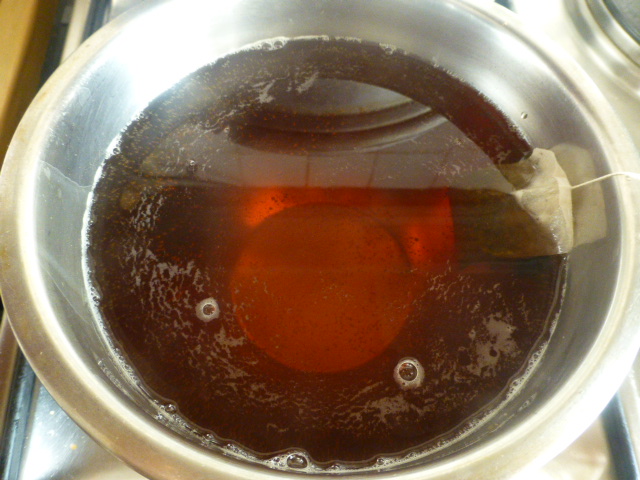
Boil water in a bowl, after it reaches boiling point, switch off the stove. Avoid over-boiling it.  Drop one Tea bag into it and dip for few seconds. When it becomes light brown, take it out.  Otherwise, it will turn bitter. Add juice of 5 to 6 limes and honey. Combine well and serve hot.  Store rest of the tea in big Flask and drink whenever you want.  It will last for almost 6 to 7 hours, consume within that time.


Hot Lemon Tea - Teh Limau!


Saturday, 9 March 2013

Vendhaya Congee/Fenugreek Porridge

Vendhaya Congee/Fenugreek Porridge

Fenugreek seeds are very nutritious and are widely used to treat diabetes, control cholesterol level, and for digestion related problems. From Ayurveda we come to know that it’s better to take all the six tastes in our meal.  Among six, salt, sweet, sour, pungent, astringent, and bitter, we often tend to neglect astringent and bitter. At least, we don’t consume these two, as much as the other four.  Fenugreek which is bitter comes in handy. It can be easily added in our meals as ‘Tempering’ in most of our Curries.  I’ll try to suggest more ways of consuming fenugreek and fenugreek leaves in my future posts. But here, I’m giving a nutritious yet very delicious way of consuming Fenugreek seeds.

In our tradition, we use to take Vendhaya Cogee/Fenugreek Porridge, when we have gastric related stomach ache, digestion related stomach ache and to get rid of excess heat from our body. This is typically consumed early in the morning, instead of coffee/tea.


Cooked Rice (parboiled) – ½ Cup

Fenugreek seeds – 1 to 2 tsp.

Salt – to taste

Water – ½ cup

Curd/Natural Yoghurt – 2 tbsp.

Small Onions/Shallots (sliced) – 3 to 4

Spring Onion/Fresh Coriander leaves (Chopped) – to garnish

Salted Lemon Pickle/Narthangai/Elumichai Urukai – little
Fermented Vendhaya Congee


Sliced Onions and spring Onion

Method:


In a bowl, mix rice with water, toss in the fenugreek seeds. Cover and keep overnight.  Early in the morning, the rice would have fermented and the seeds would have become very soft. You can feel a wonderful flavour emanating from the congee. Combine the onions, spring onion/fresh coriander leave, yoghurt/curd and salted lime pickle.  Add little or no salt, since lime pickle would have enough salt.  Relish the congee, trust me it will be delicious.


Salted Lemon Pickle:
Salted Lemon pickle

This is my all-time favourite, which I always make sure to bring from India. In our homes it’s a compelling condiment, which we use to add in Curd/yoghurt rice. Esp. when we have fever or bitterness in our mouth due to some sickness, curd rice with salted lemon will be much more palatable.

Thursday, 7 February 2013

Home Remedies/Kai Vaidhyam - Ginger Decoction/Inji Kashayam and Tulsi/Basil Kashayam


Home Remedies or Kai Vaidhyam or Paati Vaidhyam is not new for Indians, esp., it’s very common among Nagarathars/Chettiars.

Here I’m giving the remedies, which I have personally tested, tried and verified the effectiveness.
Home Remedy for Cough and Cold: Inji Kashayam/Ginger Decoction:


Inji Kashayam/Ginger Decoction
Inji Kashayam or Ginger Decoction is sure to prevent as well as treat Cough and Cold.

I used to have phlegm in my throat, throughout the year and I used to suffer from flu, very often. After I started drinking this Kashayam on a regular basis, gradually the phlegm disappeared and my flu attacks gone down.

When we take allopathy tablets like anti-histamines, decongestants, cough suppressants and expectorants, the problem is, as one symptom disappear, another will crop up. When we get rid of running nose, we are heading for cough and phlegm. Often we suffer from repeated flu attacks.

By taking Inji Kashayam, we can treat as well as prevent running nose, cough and cold. Above all, we can be rest assured that there won't be any side-effects, unless you are allergic to any one of the ingredients, which is rare.

It also promotes digestion which is very important for our health.


Inji Kashayam/ Ginger Decoction:

Ingredients for Inji Kashayam/Ginger Decoction


Ingredients:

Ginger - 1 piece (about 3 inch)

Pepper - 1 tsp.,

Cardomom /Elakkai - 3

Cloves/Kraambu - 3

Cinnamon/Pattai - 1 small piece

Palm/Rock/brown Sugar/Panankarkandu - 1 tbsp.

Omavalli/Karpooravalli leaves - few
(country borage, colcus aromatica)
(upon availability you can use it, otherwise proceed with other ingredients, will still be effective)

Betel leaves/Vethallai - 2 (upon availability)

 
Natural Palm Sugar/Panangarkandu!!


Karpooravalli/Omavalli plant in my mini garden


Method:


In a mixer, grind all the spices with water. Add one cup water and the sugar. (To dilute and make it less spicy, you can add more water.) Let it boil for few minutes. In the meantime, take the leaves pound it with a mortar & pestle, then with little water add it to the boiling Kashayam. Let it boil for 1 minute, switch off. Now filter and let it cool. When it is warm, it's ready to drink.


- Adults can drink 1/2 to 1 cup.

- Kids aged 7 and above can drink up to 1/2 cup.

- Young kids can drink 5 to 15 ml.

- It’s better to drink early in the morning, when stomach is empty.


However, we can drink 2 to three times a day, mid-morning, afternoon and early evening. Avoid drinking milk while taking Kashayam, they don't go together. Also avoid consuming after meals. Kashayam and meals should be spaced out well.

 I always try to use fresh ginger, which is greatly reflected in the effectiveness of the decoction.

Sometimes, I found the kashayam turning sticky after boiling, through the experience, I realised that the reason is the variety of the Cinnamon bark/Pattai, in such cases you can conveniently skip Cinnamon/pattai and continue with the rest of the ingredients.  

Over time I figured out Cinnamon variety is very important, now I'm using Srilankan or Ceylon Cinnamon, which is really good and flavourful. Cinnamon is well known for its medicinal properties. So it's good to include in your diet.


Srilankan/Ceylon Cinnamon


Simple Alternative for Ginger/Inji Kashayam:

 Ingredients for 2 servings:
Ginger/Inji -  2 to 3 inch piece
Cloves/Krambu  - 3 to 4
Black Pepper/Milagu  - few
Elachi/Elakkai - 2 to 3
Water - 1&1/2 Cup
Natural Palm Sugar/Panangarkandu - 2 to 3 tsp. (according to taste)
Choose Original Panangarkandu!!!


Method:
Peel the ginger and cut into small slices, along with all the other ingredients add water and grind it in a mixer/blender.
Take 1 Cup of water and mix it to the ground paste, add the Panangarkandu/palm sugar and allow it to boil. Once boiled, switch off and allow it to cool. Drain with a large strainer /filter first and again drain with a fine strainer.  Serve preferably in empty stomach or take one hour after meal.  It's very effective in preventing and treating cough and phlegm.  Also aids digestion.
Ground Mixture


Add Water to the mixture and boil...
Large Strainer..


Fine Strainer..


Ready to serve!!


Holy basil or Tulsi (Ocimum sanctum):

Basil/Tulsi


This is a very potent herb, which has excellent antibiotic property can be very very effective in getting rid of phlegm and cough; for sure it will prevent chesty infections if taken at the beginning stages.  Since it a very potent herb, we cannot consume more than 3 days in a row.  But within that, it would have magical effect.


Tulsi/Basil lightly pounded!


Tulsi/Basil with Water


Tulsi/Basil Kashayam/Decoction mixed with Ginger Decoction


Wash fresh Basil/Tulsi leaves with plenty of water, rinse again and again to get rid of soil.  Pound the leaves coarsely with mortar and pestle, to emanate wonderful flavour from the herb. Add to the already boiled ‘Ginger Decoction’, allow it to boil once. The herbs should not be boiled for a long time to retain the effectiveness.  Drain, cool and serve warm.


Alternative Method:


Pound 1 tsp. black pepper, add palm sugar and water, boil for 2 to 3 minutes, then add pounded Tulsi.  Boil for just one minute, allow it cool, strain before using it. 


Tulsi/Basil Kashayam/Decoction


To learn more about Tulsi, log on to the following website:
http://tulsiplant.org/tulsi-leaves/
In Singapore, Basil leaves or Tulsi is available at ‘Jothi Store Pushpa Kadai’, in Little India, I’ve even found in some Indian flower shops in ‘Residential areas’.